
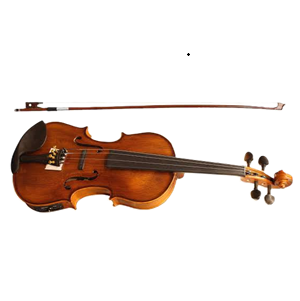
Learning to play the violin is a deeply rewarding challenge that engages the mind and body unlike almost any other instrument. Because it demands absolute precision and expressive control, its benefits extend far beyond just making music.
Here are 10 key benefits of learning the violin:
- Develops Superior Pitch Precision (The Fretless Advantage)
Because the violin has no frets, there is no visual or physical guide for where to place your fingers. Musicians must rely entirely on a highly trained ear and precise muscle memory to hit the exact micro-millimeter on the fingerboard. This cultivates an exceptional sense of intonation and relative pitch.
- Enhances Bilateral Mind-Body Coordination
Playing the violin requires complete asymmetrical coordination. The left hand operates with rapid, independent finger movements to stop the strings, while the right arm executes entirely different, fluid motions to control the weight and speed of the bow. This intense cross-hemisphere brain activity strengthens neural pathways.
- Builds Immense Grit and Patience
Let’s be honest: no one picks up a violin and sounds like a maestro on day one. Navigating the initial “scratchy” phase requires immense discipline, emotional resilience, and patience. Mastering the instrument instills a profound understanding of the value of deliberate, long-term practice.
- Sharpens Fine Motor Skills and Dexterity
The micro-adjustments required for clean articulation, string shifts, and techniques like vibrato significantly enhance finger independence, hand strength, and agility. These highly refined fine motor skills carry over into other precise physical tasks. 5.
- Cultivates Vocal-Like Emotional Expression
Like the human voice, the violin is a continuous-tone instrument capable of sliding between notes (glissando or gamakas) and sustaining sound indefinitely. This unique physical trait allows the player to mirror the nuances of vocal singing, offering an incredibly direct channel for deep emotional expression and musical storytelling.
- Boosts Memory and Cognitive Reserve
Violinists must constantly process multiple streams of information simultaneously: reading or recalling notation, monitoring pitch, controlling bow speed, and managing physical posture. Studies show that this level of instrumental training increases gray matter in the brain, improving verbal memory, spatial reasoning, and overall attention span.
- Promotes Physical Awareness and Posture
Whether playing seated in a classical Eastern tradition or standing in a Western style, the violin demands structural alignment. It requires core stability, relaxed shoulder engagement, and acute awareness of tension in the body. Learning to play efficiently builds excellent upper-body ergonomics and physical control.
- Teaches the Art of Active Listening
To play well with others—whether accompanying a soloist, playing in a chamber ensemble, or anchoring an orchestra—a violinist must master the art of split-attention listening. You learn to monitor your own pitch and tone while simultaneously blending, balancing, and adapting to the timing of the musicians around you.
- Unmatched Stylistic Versatility
The violin is a global chameleon. Mastering it opens doors to an incredibly diverse array of musical traditions, transitioning seamlessly from Western classical and South Indian Carnatic music to jazz, folk, fiddling, and modern cinematic fusion.
- Serves as a Form of Mindful Focus
The absolute concentration required to balance the bow, track the pitch, and shape a melody forces the mind entirely into the present moment. This deep state of “flow” acts as an active, meditative escape from daily stressors, significantly lowering anxiety and promoting mental clarity.