
Online · Offline

Mridangam

Beginner Intermediate Advanced
Mridangam

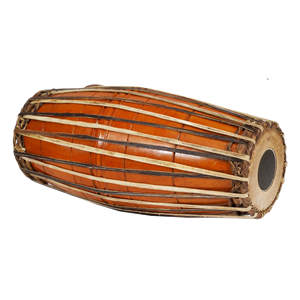
The Mridangam—the premier percussion instrument of South Indian classical music—is often described as the Deva Vadya (divine instrument) and the bedrock of laya (rhythm). Learning to play the mridangam is a rigorous intellectual and physical discipline that shapes the brain, body, and musical intuition in profound ways.

Here are 10 key learning benefits of mastering the Mridangam:

  1. Absolute Mastery of Laya (Rhythmic Integrity)

    The mridangam teaches an uncompromising internal sense of time. Students learn to maintain a flawless, unshakeable pulse (kalapramanam) across varying speeds (kala), ensuring they can ground an entire concert ensemble without wavering.

  2. High-Level Mathematical and Fractional Thinking

    Mridangam playing is rooted in complex mathematics. Designing and executing korvais (rhythmic structures) and mohras involves calculating intricate fractions, subdivisions of beats, and patterns that must precisely conclude on the samam (the first beat of the rhythm cycle). This builds elite mental agility and structural processing.

  3. Advanced Independent Bilateral Coordination

    The mridangam is an asymmetrical double-sided drum. The right hand (valanthalai) handles high-pitched, crisp, multi-finger striking techniques, while the left hand (thoppi) modulates bass tones through sliding wrist pressure. Forcing both hands to perform entirely different, highly specialized tasks simultaneously creates powerful neural pathways across both brain hemispheres.

  4. Sharpens Finger Dexterity and Ambidexterity

    The execution of rhythmic syllables (sollukattus like Tha, Thi, Thom, Nam) requires isolating specific fingers and striking exact zones on the drum skin. This builds incredible fine motor control, finger independence, wrist flexibility, and overall hand dexterity that far exceeds standard percussive playing.

  5. Develops Acute Auditory Tracking and Active Listening

    A great mridangam player does not just play rhythm; they play the melody. Accompaniment requires listening intensely to the vocalist or instrumentalist, decoding their phrases in real-time, and providing a rhythmic commentary that enhances the bhava (emotion) of the composition. This sharpens split-second cognitive processing and deep active listening.

  6. Boosts Working Memory and Structural Retention

    Mridangam students memorize extensive catalogs of traditional lessons, nadai variations, and lengthy concluding phrases across various talas. Because notation is rarely used during a live performance, the art form expands working memory capacity and long-term retention.

  7. Enhances Physical Stamina and Core Strength

    Playing the mridangam is physically demanding. It requires sitting cross-legged on the floor, balancing a heavy wooden instrument, and maintaining high-energy execution for hours. This builds exceptional core stability, upper-body ergonomics, physical endurance, and muscular stamina.

  8. Fosters Collaborative Empathy and Intuition

    As the primary accompaniment, the mridangam player must be highly adaptive. Learning the instrument teaches a musician how to support others, anticipate a soloist’s creative moves (manodharmam), and strike a perfect balance between personal virtuosity and collective musical elevation.

  9. Sharpens Spontaneous Creative Composition

    During the Tani Avarthanam (the percussion solo section of a concert), the mridangam player becomes the soloist. This demands instantaneous creative improvisation within the strict mathematical boundaries of the prevailing tala, fostering exceptional problem-solving skills under pressure.

  10. Refines Acoustic Sensitivity and Tuning Precision

    The mridangam is a highly sensitive melodic drum. Players must develop a keen ear to tune the right side perfectly to the soloist’s fundamental pitch (sruthi) using a tuning stone and wooden peg, while ensuring the bass side is perfectly balanced. This cultivates an advanced understanding of acoustic physics and tonal aesthetics.

🎯 What You'll Learn

Authentic Carnatic techniques and fingering
Classical ragas and characteristic phrases
Rhythm and tala understanding
Stage performance confidence
Traditional compositions and kritis
Sight-reading of swara notation
Enquire
per 3 Months
📊 Levels Beginner, Intermediate, Advanced
⏱ Duration 3 Months
📍 Mode Online / Offline
📝 Register Now Book Free Trial

Have Questions?

Call us and we'll answer everything.

📞 +91 96779 65555
Explore More

Other Courses