
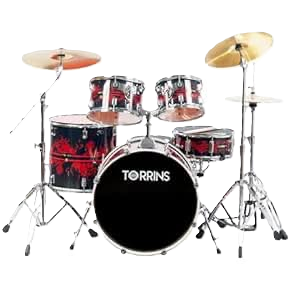
Learning the drums is a high-energy, full-body discipline that engages the brain and muscles like few other activities can. Because it requires total physical involvement and split-second mental calculations, the benefits of drumming span from intense neurological development to peak physical fitness.
Here are 10 key benefits of learning the drums:
Drumming is the ultimate test of physical independence. A drummer must train all four limbs to execute completely different rhythms simultaneously: the right hand keeping time on a cymbal, the left hand playing a snare pattern, the right foot operating the bass drum pedal, and the left foot controlling the hi-hat. This intensive training builds extraordinary cross-hemisphere brain connectivity.
Drumming is a highly therapeutic, tactile outlet for releasing tension and frustration. The physical act of striking a drum stimulates the release of endorphins and enkephalins (the body’s natural feel-good chemicals), drastically lowering cortisol levels, reducing anxiety, and inducing a state of mental clarity and calm.
Playing a full drum set is an athletic workout. A fast-paced drumming session engages the core, calves, thighs, shoulders, and forearms, providing a highly effective aerobic workout that improves cardiovascular health, builds muscular stamina, and burns significant calories.
The drummer is the clock of any musical group. Learning the drums instills a rock-solid internal sense of pulse (tempo). It teaches a musician how to anchor an entire band, master subdivisions of beats, and handle transitions between different tempos and meters without wavering.
Navigating a multi-piece drum kit requires moving your arms and legs precisely across a three-dimensional space without looking at the gear. This drastically improves spatial-temporal reasoning, depth perception, reflexes, and gross motor skills.
Behind every groove is a framework of complex math. Drummers constantly calculate fractional time signatures, polyrhythms, and complex syncopations on the fly. This structured, analytical pattern-matching enhances logical reasoning and sharpens mental processing speeds.
Drummers have to internalize and recall intricate patterns, fills, and song structures while listening to other musicians in real-time. Studies show that the intense multi-sensory processing involved in drumming actually alters brain structure, thickening the fibers that connect the left and right hemispheres.
In any musical ensemble, the drummer holds the steering wheel. Learning the drums teaches you how to lead a band through structural transitions (like moving from a verse to a chorus) while simultaneously learning to listen deeply, support other soloists, and drive the collective energy of the group.
While keeping a steady beat is essential, mastering the drums allows for incredible creative freedom during fills and drum solos. It teaches musicians how to instantly compose spontaneous rhythmic phrases within a structured timeframe, fostering excellent creative problem-solving skills.
The drum kit is a global instrument. The foundational rudiments and hand-to-foot coordination learned on the drums transfer seamlessly across almost every musical genre on the planetβfrom rock, jazz, and Latin grooves to modern cinematic fusion, electronic music production, and classical percussion.